Executive Summary: From TikTok Concept to 250,000 Units Sold in 11 Months
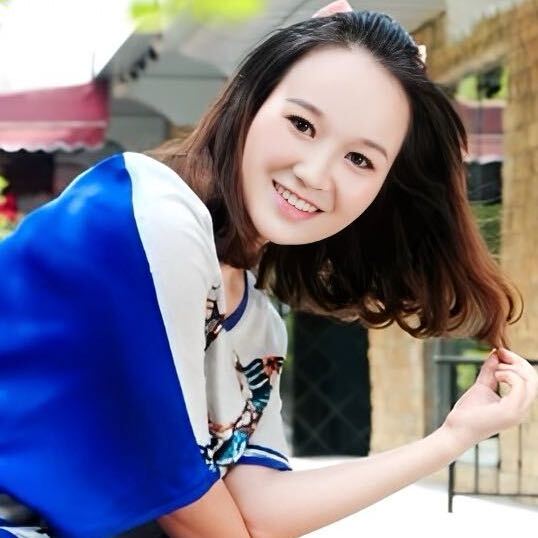
In early 2024, a US-based beauty content creator with a modest but engaged following of 180,000 TikTok subscribers approached Guangzhou Chumei Cosmetics Co., Ltd. with a simple ambition: to transform her viral ‘bond-repair rosemary scalp serum’ concept into a shelf-ready product before her audience momentum faded. Eleven months later, her private-label hair care brand had shipped over 250,000 units across three SKUs, achieved a gross margin of 68%, and secured shelf placement in two regional US beauty retail chains. This case study documents the behind-the-scenes engineering, formulation, and agile manufacturing decisions that made this trajectory possible.
At the center of this success was a Turnkey Cosmetics Manufacturing partnership executed inside Chumei’s 10,000-square-meter, 100,000-level GMPC standardization workshop in Shenshan, Jianggao Town, Baiyun District. From formula matching and stability testing to FDA-compliant labeling, custom bottle tooling, and a phased MOQ scaling strategy, Chumei served as a single accountable partner for every stage of the product journey. For B2B readers evaluating OEM/ODM partners, this article breaks down the exact workflow, timelines, cost structures, and risk-mitigation frameworks that allowed a solo founder to compete against category incumbents, without the overhead of building her own supply chain.
The Founder’s Challenge: Why Traditional Sourcing Was Failing Her
Before contacting Chumei, the founder, whom we will refer to as ‘Client A’ under our confidentiality agreement, had already spent nearly seven months attempting to bring her hair care line to market through conventional sourcing routes. Her experience reflected the systemic frustrations that thousands of emerging beauty founders encounter when transitioning from content creation to physical product commerce.
Her first pain point was prohibitively high minimum order quantities. Three of the five factories she initially contacted required MOQs of 5,000 to 10,000 units per SKU, with upfront tooling and mold fees exceeding USD 18,000. For a first-time founder validating a hero product against an unpredictable social-commerce audience, this represented an unacceptable inventory risk. A single formulation miss could translate into tens of thousands of dollars in unsellable stock.
The second obstacle was fragmented R&D communication. One factory quoted a formulation lead time of 90 days but required Client A to independently source her active ingredients, including a specific molecular-weight hydrolyzed keratin and a bond-repair peptide complex she had researched from clinical papers. The factory positioned itself as a filler and packer rather than a co-developer, leaving the scientific burden on a founder without a chemistry background.
The third and most damaging issue was regulatory ambiguity. Client A’s target market was the United States, requiring MoCRA (Modernization of Cosmetics Regulation Act) facility registration, product listings, safety substantiation, and compliant ingredient labeling under INCI conventions. Two of the vendors she consulted openly admitted they had no in-house regulatory team and would provide only a basic Certificate of Analysis. This left her exposed to Amazon delistings, customs seizures, and retailer rejections downstream.
Finally, there was the challenge of packaging illiteracy. Client A had a clear brand aesthetic, an emerald-green amber glass dropper bottle with a matte-embossed logo, but no understanding of decoration processes, compatibility testing between formula and container, or the cost implications of custom mold tooling versus stock bottles. Every factory she spoke to quoted packaging separately from bulk, forcing her to coordinate between three or four vendors just to produce a single finished good. When she reached out to Chumei in February 2024, she framed her request bluntly: ‘I need one partner who can handle everything from the formula to the finished carton, and who will not walk away when my first order is only 1,000 units.’ That request became the founding brief of the engagement.
Chumei’s Turnkey Solution: A Single-Factory, Full-Stack Response
Chumei’s response was structured around our core operating philosophy, what we internally call a ‘community-of-shared-future partnership,’ meaning that our commercial success is contractually tied to the success of the founders we incubate. Instead of quoting Client A a transactional per-unit price, our project team designed a five-phase Turnkey Brand Incubation roadmap covering formulation, compliance, packaging engineering, pilot production, and scale-up. Each phase carried defined deliverables, milestone gates, and shared KPIs.
Phase 1: Formulation Matching and Benchmarking Inside the GMPC Workshop
Within 72 hours of the signed NDA, Client A shipped three benchmark products she admired to our Baiyun R&D laboratory: a prestige US bond-repair serum, a European rosemary scalp tonic, and a Korean peptide hair essence. Our formulation chemists performed comparative analysis, including viscosity profiling, pH mapping (target range 4.8 to 5.5 for scalp compatibility), and organoleptic benchmarking. Within 18 days, we produced three formulation candidates that matched her sensory targets while incorporating her specified hero actives: 0.5% rosemary leaf extract, 2% hydrolyzed keratin (5 kDa molecular weight), and a 0.1% biomimetic bond-repair peptide.
Critically, all bench-scale batches were compounded inside our 100,000-level cleanroom, ensuring that stability data collected during R&D would directly translate to commercial production, no scale-up surprises, no formula drift between lab and line. Accelerated stability testing (45°C for 12 weeks, equivalent to 24 months at ambient) confirmed formula robustness by day 45 of the engagement.
Phase 2: Regulatory and Compliance Architecture
Parallel to R&D, our in-house regulatory affairs team began building the US market compliance file. Because Chumei operates under a documented GMPC Compliance & Certification framework, our facility documentation, batch records, and quality systems were already structured to satisfy MoCRA’s Good Manufacturing Practice expectations. We prepared the following for Client A at no additional line-item cost, bundled into the turnkey program:
- MoCRA facility registration support and product listing documentation
- INCI-compliant ingredient declarations in descending order of concentration
- Safety Data Sheets and Certificates of Analysis for every raw material lot
- Preservative efficacy testing (USP 51) and microbial challenge reports
- Cosmetic Product Safety Reports drafted to substantiate marketing claims
This compliance bundle removed what had been Client A’s largest source of anxiety and, according to her post-launch interview, was the single factor that convinced her to sign with Chumei over two lower-priced competitors.
Phase 3: Custom Packaging Design and Component Sourcing
Our industrial design team took Client A’s mood board, references to apothecary aesthetics, emerald green glass, brass-tone dropper collars, and translated it into a manufacturable specification. Rather than commissioning a custom bottle mold (which would have cost approximately USD 12,000 and added 60 days to the timeline), we identified a stock 60 ml amber glass bottle from our qualified component library that could be spray-coated in the exact Pantone 3305 C emerald green Client A wanted. This decision alone saved her USD 12,000 in tooling and 45 days in lead time.
Compatibility testing between the reformulated serum and the coated glass was run for six weeks in our stability chamber to confirm that neither the coating nor the dropper bulb interacted with the peptide actives. Silk-screen printing with a matte-embossed varnish overlay achieved the tactile finish Client A had specified, at a per-unit decoration cost of USD 0.34, compared to USD 1.10 for hot-stamped foil alternatives.
Phase 4: Pilot Production and Design Validation
Chumei ran a 1,000-unit pilot batch as the formal Design Validation lot. This pilot served three functions simultaneously: it verified line efficiency at commercial speed, generated retention samples for shelf-life monitoring, and provided Client A with inventory for her TikTok launch campaign. Total elapsed time from signed brief to palletized finished goods was 94 days, roughly one third of what her earlier vendor conversations had projected.
Agile Manufacturing and Scaling: Handling the Viral Surge
Client A launched her hero SKU on TikTok Shop on June 14, 2024, with a founder-story video that reached 2.1 million views in its first 48 hours. Her 1,000-unit pilot inventory sold out in 71 hours. By day five, she had accumulated a waitlist of 8,400 pre-orders. This is the exact operational scenario where most emerging brands collapse under their own success, and where our agile manufacturing model was designed to intervene.
Because the pilot batch had been produced under full commercial documentation, our production planning team was able to trigger a 15,000-unit restock order on day three of the viral event, before Client A had formally placed the purchase order. Raw materials had been pre-qualified and, for the two long-lead actives (the bond-repair peptide with a 35-day supplier lead time), we had proactively held safety stock in our bonded warehouse under a shared-risk agreement negotiated during Phase 1. This pre-positioning cut what would have been a 60-day restock cycle down to 22 days.
The restock order was compounded, filled, decorated, and secondary-packaged in a single continuous production window, with our quality assurance team performing in-process inspections at four checkpoints: bulk release, filling accuracy (±2% fill weight tolerance), decoration quality (AQL 1.5 for critical defects), and final carton audit. Air freight from Guangzhou Baiyun International Airport to Los Angeles delivered the restock to Client A’s 3PL on day 26 post-order, allowing her to fulfill the waitlist before customer sentiment cooled.
By the end of Q3 2024, Chumei was running monthly production cycles of 25,000 to 40,000 units for Client A’s expanding catalog, which by then included a companion scalp mask and a leave-in bond-repair mist. Our willingness to accept a 1,000-unit initial MOQ, and then scale to 40,000 units per month within 90 days, is the operational elasticity that distinguishes true turnkey partners from transactional contract manufacturers.
The Results and ROI: Business Outcomes That Matter
The engagement between Chumei and Client A produced quantifiable business outcomes that we believe are instructive for any founder or investor evaluating Turnkey Cosmetics Manufacturing partnerships. The following metrics are shared with the client’s written permission, with absolute figures anonymized where commercially sensitive.
- Time-to-market: 94 days from signed brief to palletized finished goods, versus a 210-day industry benchmark for comparable custom formulations.
- Initial capital exposure: USD 11,200 for the 1,000-unit pilot, inclusive of formulation, compliance, packaging, and finished goods, compared to a projected USD 62,000 minimum through her prior vendor quotes.
- Landed cost per unit at scale: USD 4.18 for the hero serum, against a retail price of USD 32, yielding a gross margin of 68% after 3PL and payment processing.
- Cumulative units shipped (June 2024 to April 2025): 252,000 across three SKUs.
- Reorder cycle time: Reduced from an initial 45 days to a steady-state 22 days by month four.
- Quality performance: Zero customer complaints related to product stability, packaging failure, or microbial contamination across the shipped volume.
- Regulatory outcomes: Zero customs holds, zero Amazon listing rejections, and successful onboarding into two regional US beauty retail chains that required third-party GMP audits, audits which Chumei’s facility passed on first submission.
Perhaps the most meaningful outcome is one that does not appear on a spreadsheet. Client A retained full ownership of her formulations, her brand assets, and her customer relationships. Chumei’s role was to be the invisible manufacturing backbone that made her vision commercially viable, not to insert ourselves between her and her audience. This is the operating principle behind our community-of-shared-future philosophy, and it is why, by the time Client A launched her second and third SKUs, she extended her exclusivity agreement with our factory through 2027.
Call to Action: Building Your Brand Inside a GMPC Workshop That Grows With You
The story of Client A is not unique in its ambition, but it is instructive in its execution. Every year, thousands of content creators, esthetician-founders, and independent beauty entrepreneurs attempt the transition from audience to product. The majority stall at the same three obstacles Client A faced: high MOQs, fragmented R&D, and regulatory blind spots. The founders who succeed are almost always those who chose a single accountable manufacturing partner early, rather than assembling a supply chain from disconnected vendors.
Guangzhou Chumei Cosmetics Co., Ltd. was founded in 2016 with a specific mandate: to be that single accountable partner for emerging beauty brands. Our 10,000-square-meter, 100,000-level GMPC standardization workshop in Baiyun District is designed for exactly the kind of agile, low-MOQ, rapid-scale production that modern social-commerce brands require. You can learn more About Chumei Factory and the equipment, certifications, and R&D capabilities we bring to every engagement. Whether you are validating your first hero SKU with a 1,000-unit pilot or scaling an established catalog to six-figure monthly volumes, our turnkey program is structured to meet you where you are and grow with you. If you are ready to discuss your formulation brief, packaging vision, or target market compliance requirements, we invite you to Contact Chumei R&D Team for a confidential technical consultation. The next viral hair care brand built in Guangzhou could be yours.